
Lesson1: What is Melt & Pour Soap?
Back to: Melt and Pour Soap Making
0
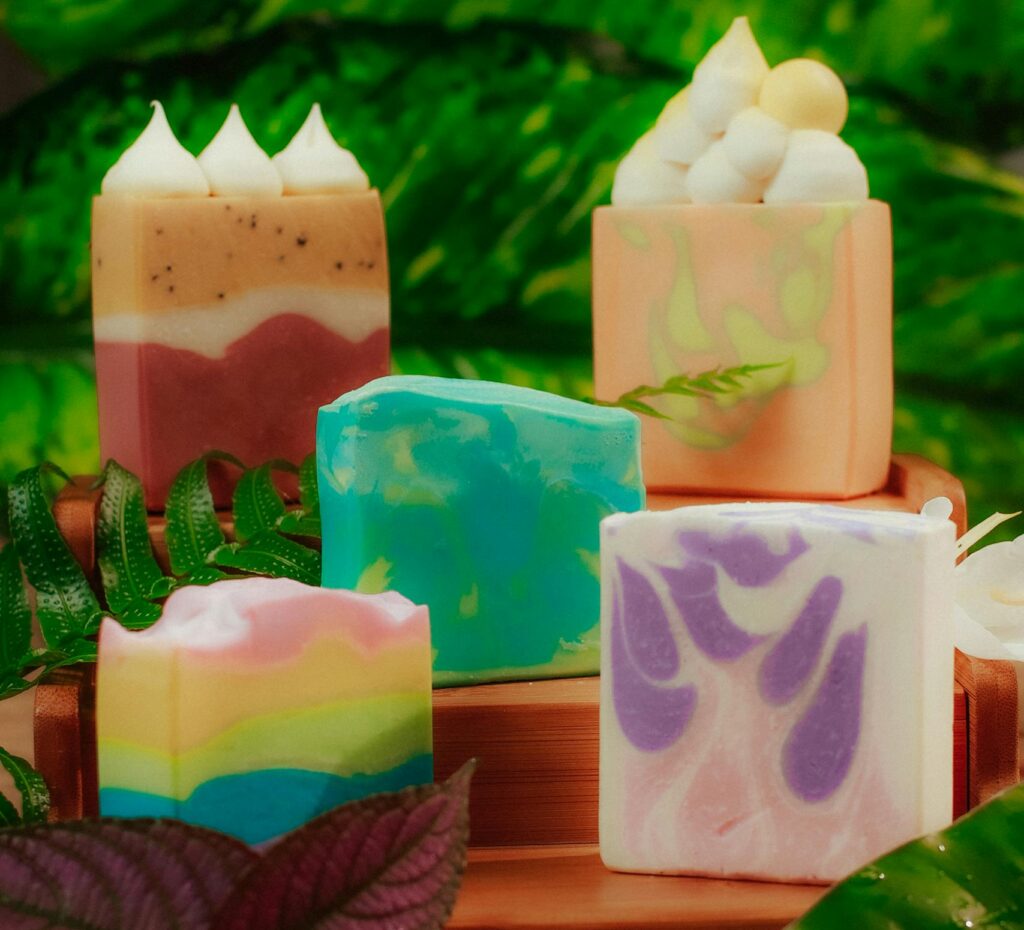
Learning Objectives
- Understand what sets Melt & Pour soap apart from cold-process soap.
- Recognize the pros and cons of using Melt & Pour methods.
- Identify the kinds of learners and entrepreneurs best suited for Melt & Pour.
Lesson Content
Melt & Pour soap is a ready-made soap base that has already gone through saponification (the chemical reaction that makes soap). Unlike cold-process soap, you don’t need to handle caustic soda (lye). Instead, you simply melt the base, add your desired colors, fragrances, and additives, and pour it into molds. Once it cools and hardens, your soap is ready for use or sale.
Comparison: Melt & Pour vs Cold Process
- Melt & Pour
- ✔ Beginner-friendly (no handling of caustic soda).
- ✔ Fast results – soaps are ready in hours, not weeks.
- ✔ Perfect for creative designs (layers, embeds, swirls).
- ✘ Less control over the ingredients (you buy a pre-made base).
- ✘ May “sweat” in humid climates if not packaged well.
- Cold Process
- ✔ Full control of oils, lye, and formulation.
- ✔ Can create “from scratch” recipes.
- ✘ Requires careful handling of lye (safety risk).
- ✘ Curing time (4–6 weeks before soap is ready).
👉 Key Insight: For learners who want to start small businesses quickly and safely, Melt & Pour is the ideal entry point.
Reflection Prompt
- Which method appeals more to you right now — Melt & Pour or Cold Process? Why?
- Do you see yourself more as a hobbyist, or are you considering turning this into a business?
Key Takeaways
- Melt & Pour soap is beginner-friendly and creative.
- It’s ready to use within hours.
- Great for learners who want to sell soaps fast or make gifts without chemical handling.